


When it’s been a while since you’ve written, you find yourself ghost-writing a lot in your head. It’s only when I’m cleaning that I have coherent thoughts, in most cases, the process of consciously writing rarely feels right. Words catch at my throat, thoughts hide in the corners, I’m always driving into a red light. I reread past writing and I don’t know how I did it.
What I do know is the pitfalls of my own writing. Usually, moments after publishing, it becomes painfully clear where my sentences staccato and circle. Oftentimes I’ll use the same words moments after each other, have copious em dashes (before I knew that was also a sign of AI writing), describe things in groups of threes, and start with an extremely specific anecdote only I could know.
There comes a point in craft where you find a familiar groove you enjoy tracing over and over. It happened when I was drawing, before I knew it, I could autopilot a face and talk to someone at the same time. My hands would trace the same curve and crinkle of the eye and then the dip of a nose and mouth, it was as if my unconscious knew exactly what would produce a result I liked. Pushing myself required acting fast when inspiration struck. Like riding a bike and seeing a deer moving past you, imagination briefly appearing in reality.
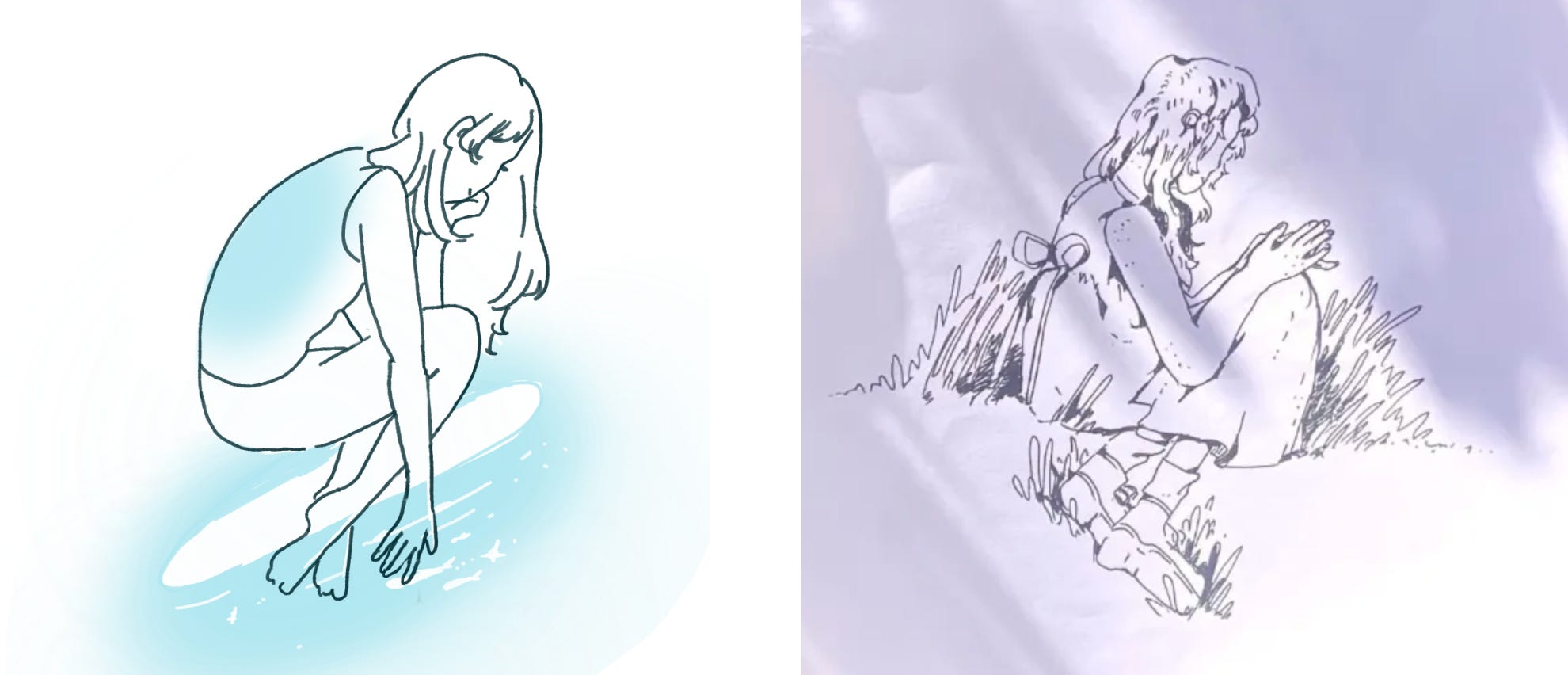
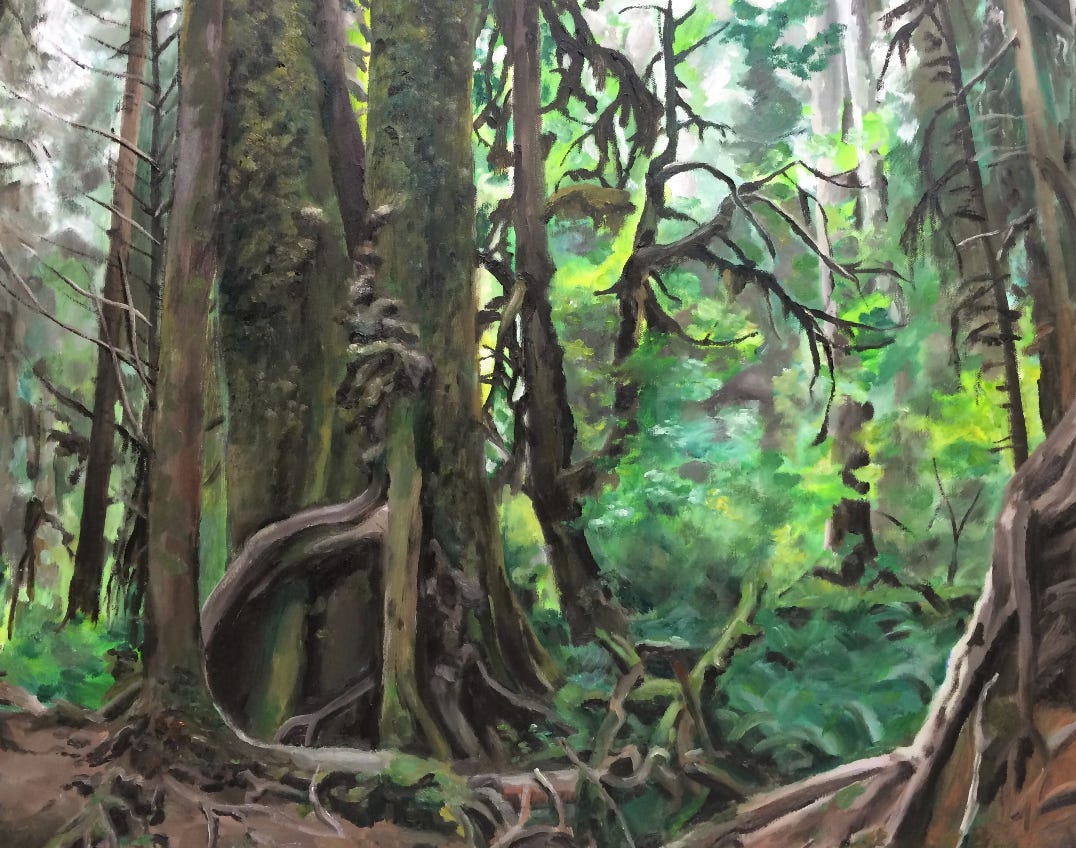
One of the grooves I was stuck in was over-rendering. When I created oil paintings, I used to spend hours making all parts of an image as hyperrealistic as possible. The problem is if everything is clear, nothing is anymore.
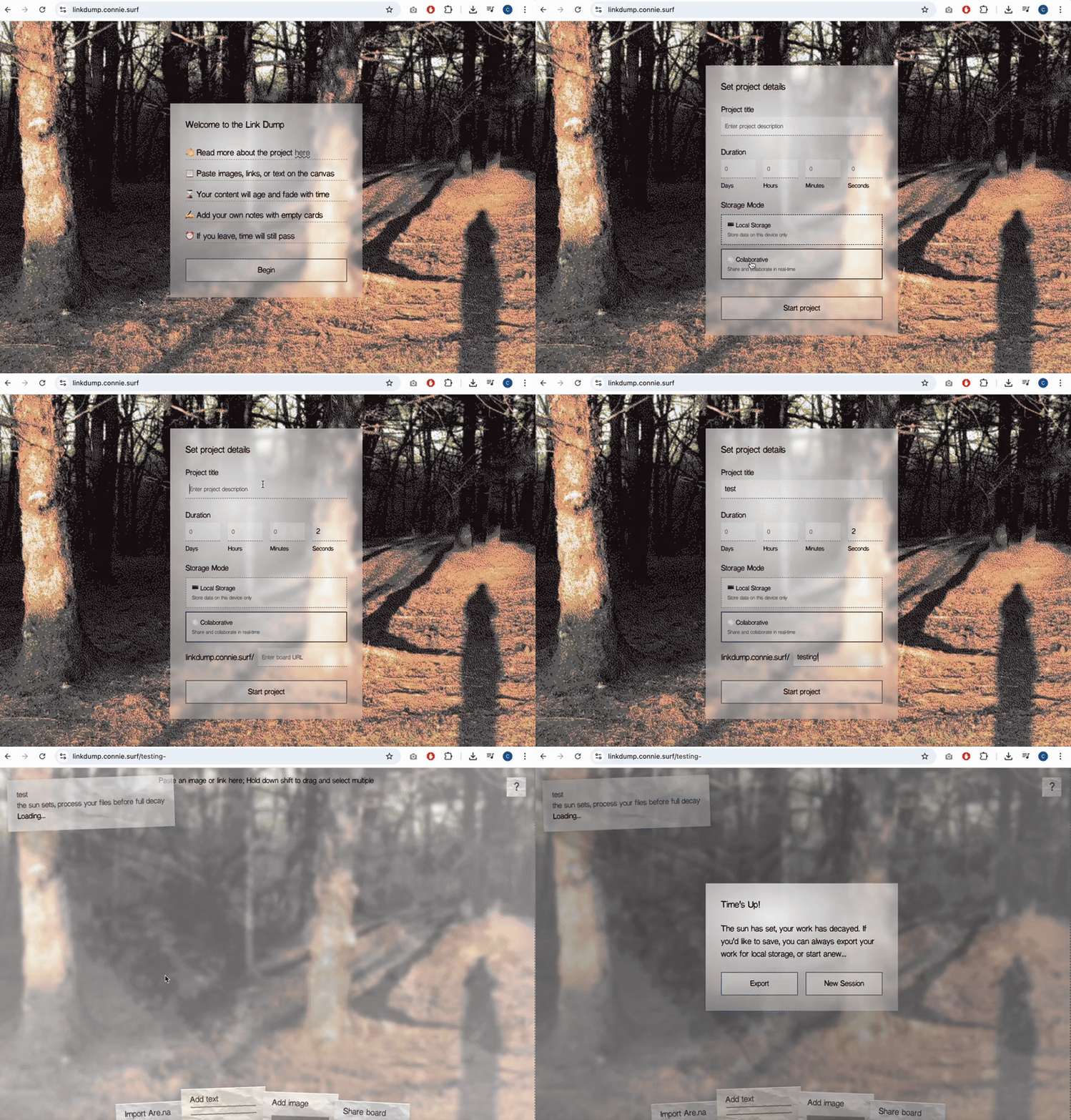
I didn’t think it was possible but I found myself doing over-rendering again when I was making websites. While I created Link Dump1, there were times I spent hours on the details - one evening I spent an hour making sure the onboarding modal would smoothly transition to the start screen to then learn that no one was going to read through it. There were a lot of parts of the website I kept on visually iterating on, thinking it would make it more alive when in reality people weren’t going to interact it the way I wanted, if at all. It resembled more like a video than a living being and websites are most fun when they’re alive.
When I speak of aliveness in art, it means that interacting with it will change both the creator and the viewer. The depth isn’t in aesthetics, but how it will affect how they see their day to day. It requires a bridging between current reality and imagined future, a concession towards utility. Making inprogress.works2 was a step towards this direction, of seeing product as an art form that balances my own wishes and the world’s.
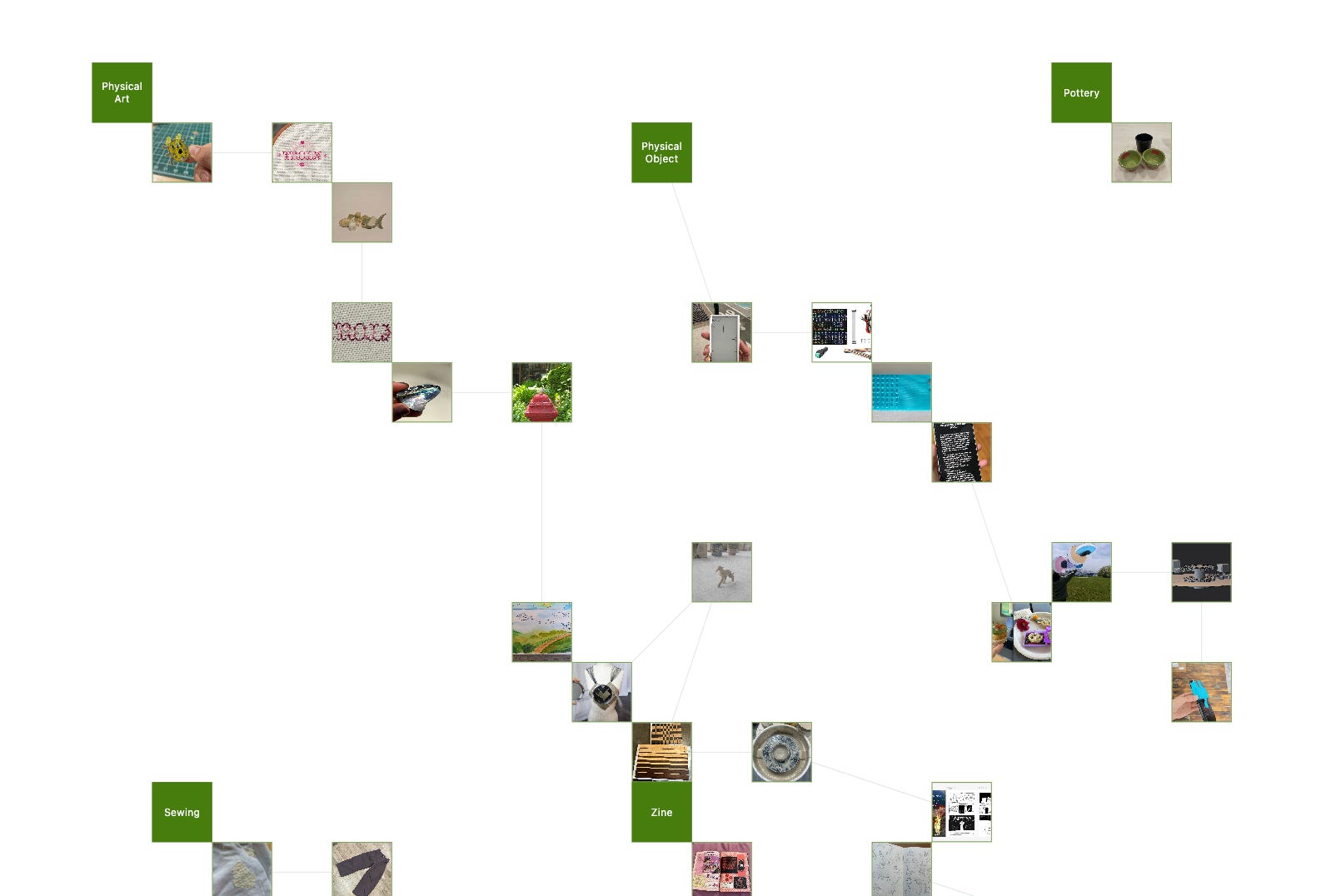
Usefulness comes from understanding how other people see. It requires a lot of prototypes, experiments, and observation of the subsequent interaction. Each try is a step closer towards the truth of what you want to say and what you believe. I’ve been examining this kind of exploration with my light research notepad and link explorer. I’m not necessarily sure where I’m going to land with these tools but each attempt reveals more of the map.
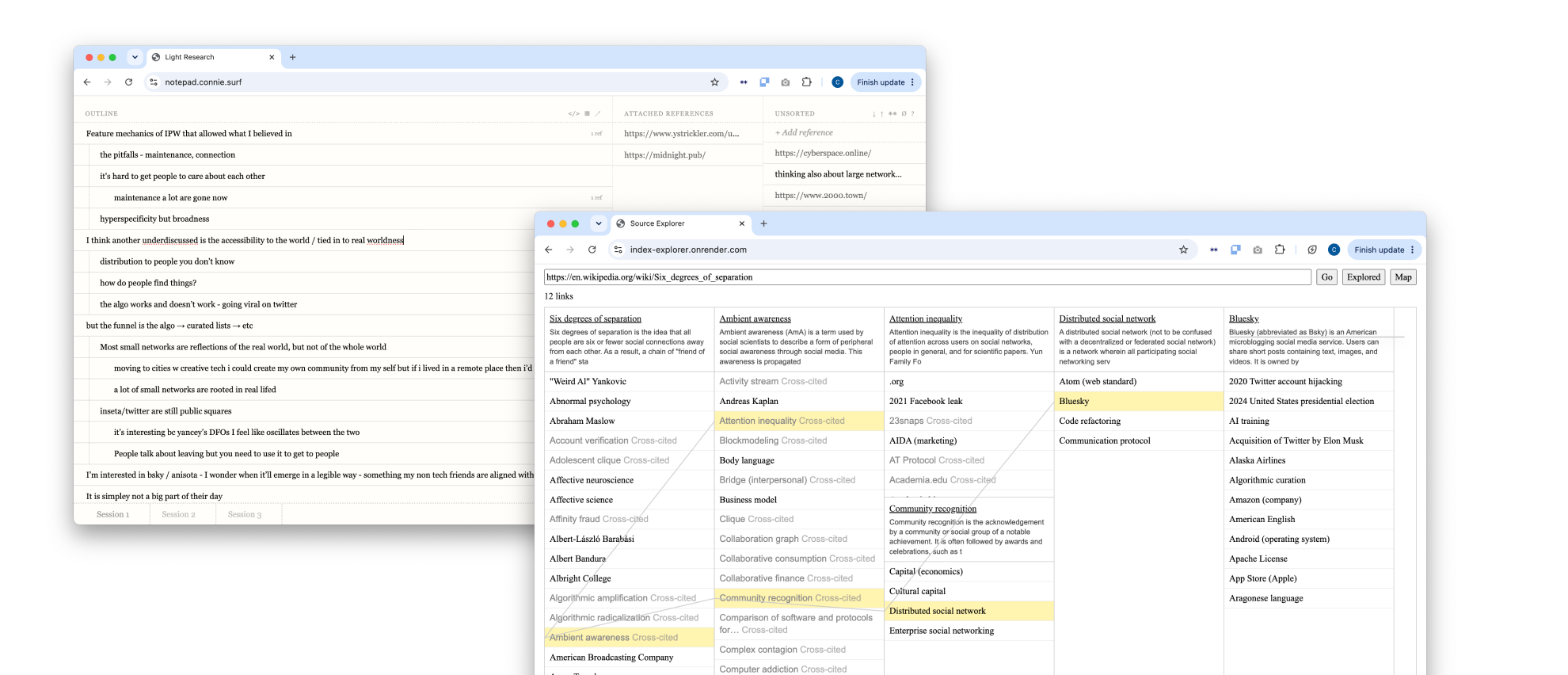
More than ever, I’m interested in how art reveals not only the interiority of myself, but of the world around me.
Miscellaneous notes!
I have a few more topics I want to write about this summer → wanting to be known but anonymous on the internet, cultural visual design aesthetics (and how that’s shaped by the tools), online durational performance art, how to find meaning in a long messy middle, lightweight shareable indexes
Been exploring some freelance brand/web projects, I like graphic design a lot
On that topic I want to improve the thumbnails/branding of this newsletter :^)
Recently finished up CAS! It was nice meeting weekly IRL and served as a good way for me to test out a bunch of ideas around sharing links socially
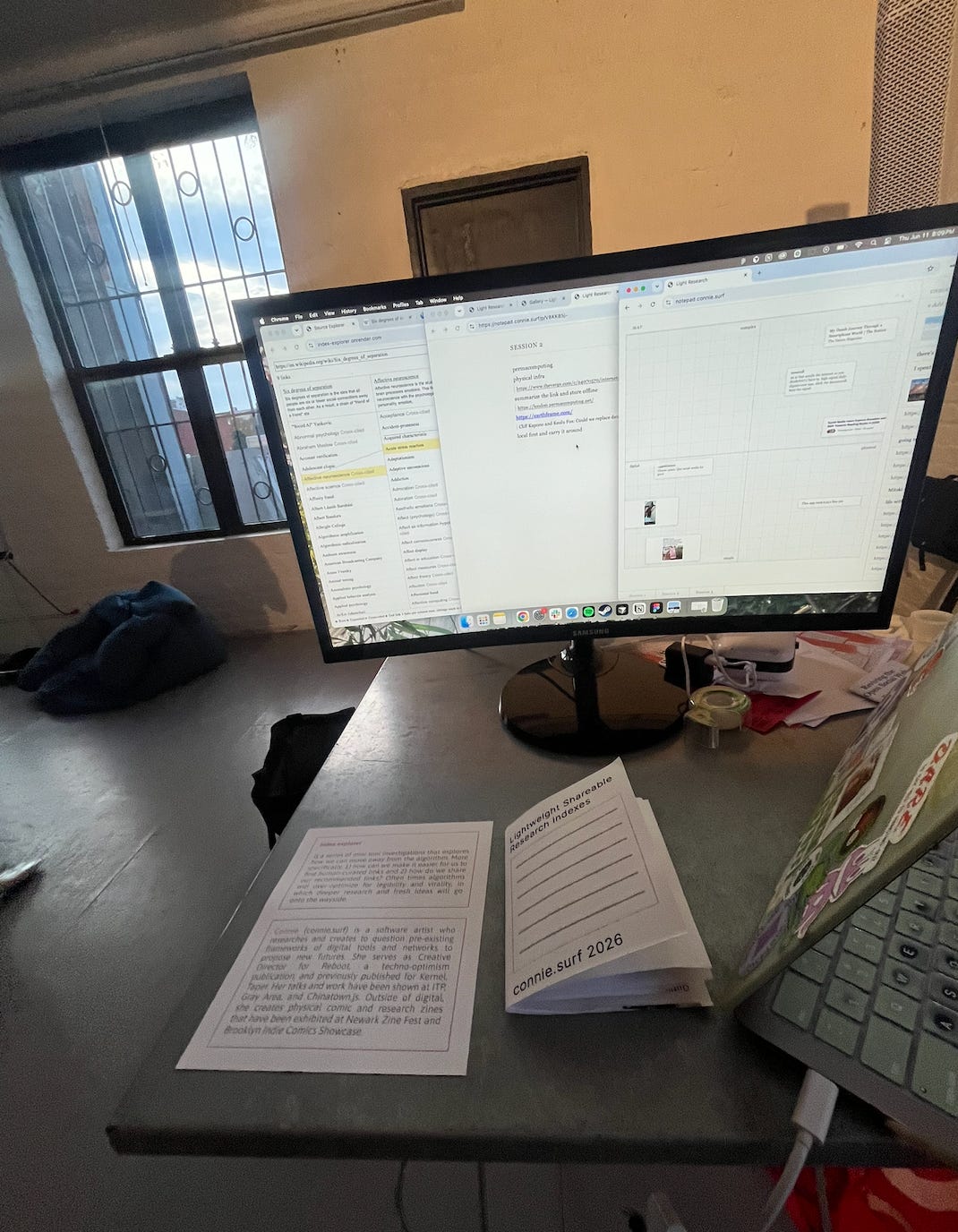
my CAS project! better documentation coming soon… Writing is hard after a long stretch of not doing so.. read over this a few times but still feels rough at the edges
As always reach out if anything piqued your interest!
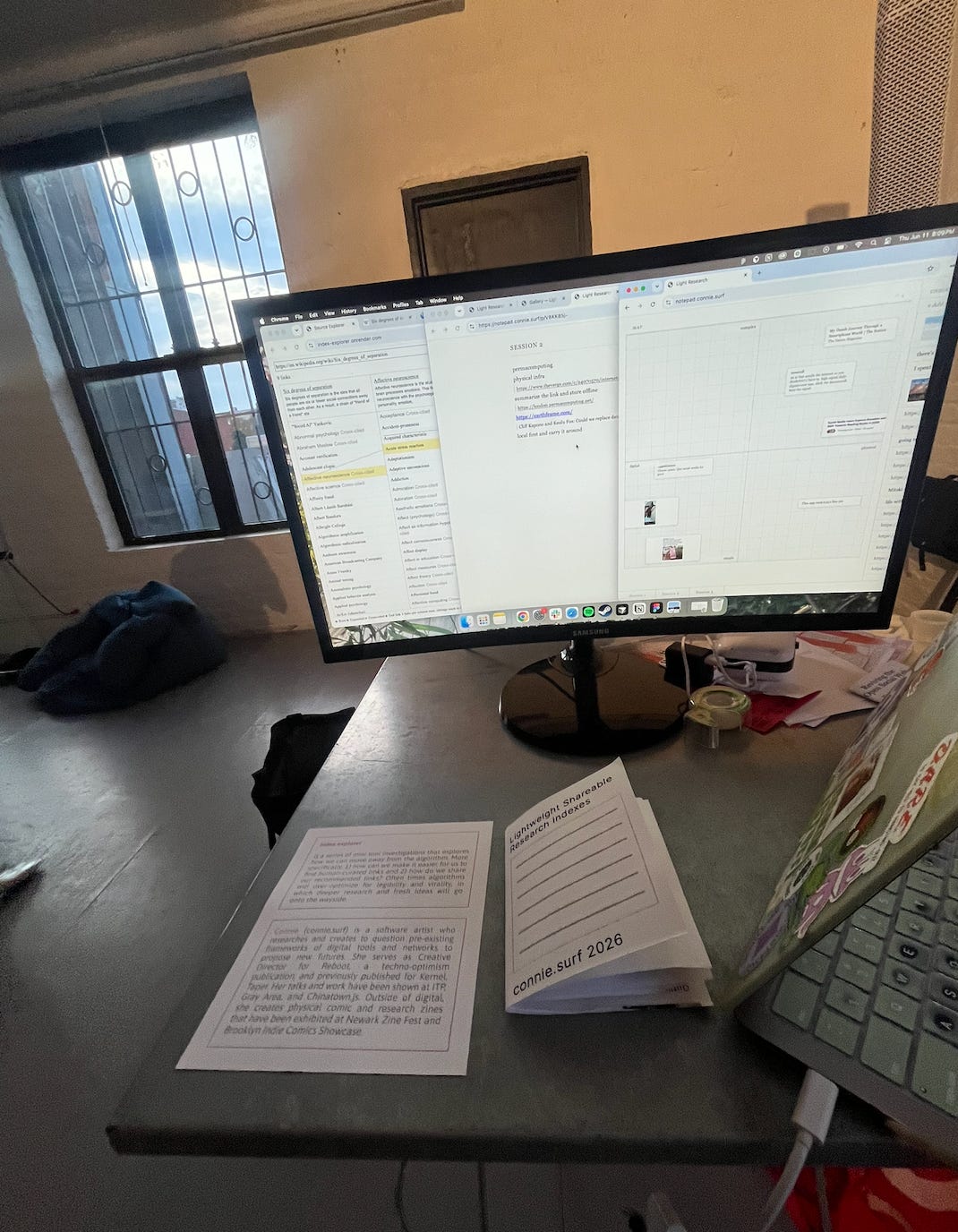
is so fascinating to me bc I also see it at times as a form of care - like you love it so much you keep finding ways to keep doing and doing and doing
over rendering